Ground tackle

The anchors, and how they set

The cruising anchor types, illustrated and animated — new-generation scoop, plough, fluke, claw, fisherman, grapnel and mushroom. Watch each set into the seabed and learn the ground it holds, the ground it skates, and where it fits the RYA syllabus. Every anchor below is shown digging into the seabed the way it does in life — the shape is the whole story of where it holds and where it lets go. Original artwork.

New-generation scoops

The modern primaries: concave blades that bury deeper the harder they’re pulled, and right themselves every time.

Roll-bar scoop

e.g. Rocna

Excellent hold

The benchmark of the new generation. A concave, spade-shaped fluke buries deeper the harder it is pulled, and the roll-bar hoop guarantees it lands the right way up however it hits the bottom. It sets almost at once and holds far above its weight.

Sets: A hoop over the back rolls it upright; the concave blade then knifes deep.

Holds in
Sand, mud — most seabeds
Skates in
Hard rock, very heavy weed

The modern primary anchor — the high-holding shape now recommended for serious cruising.
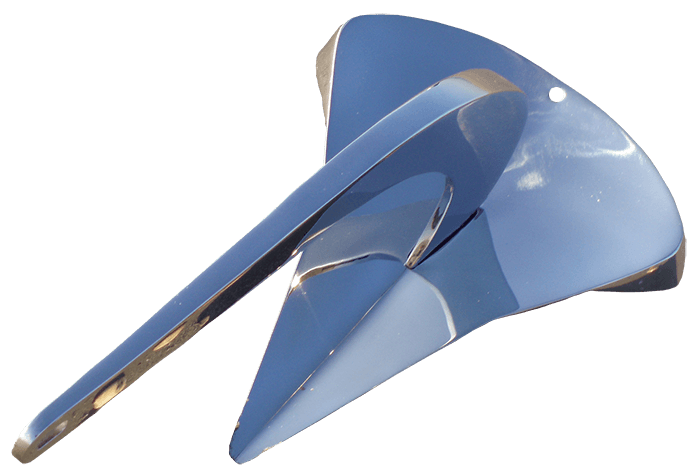
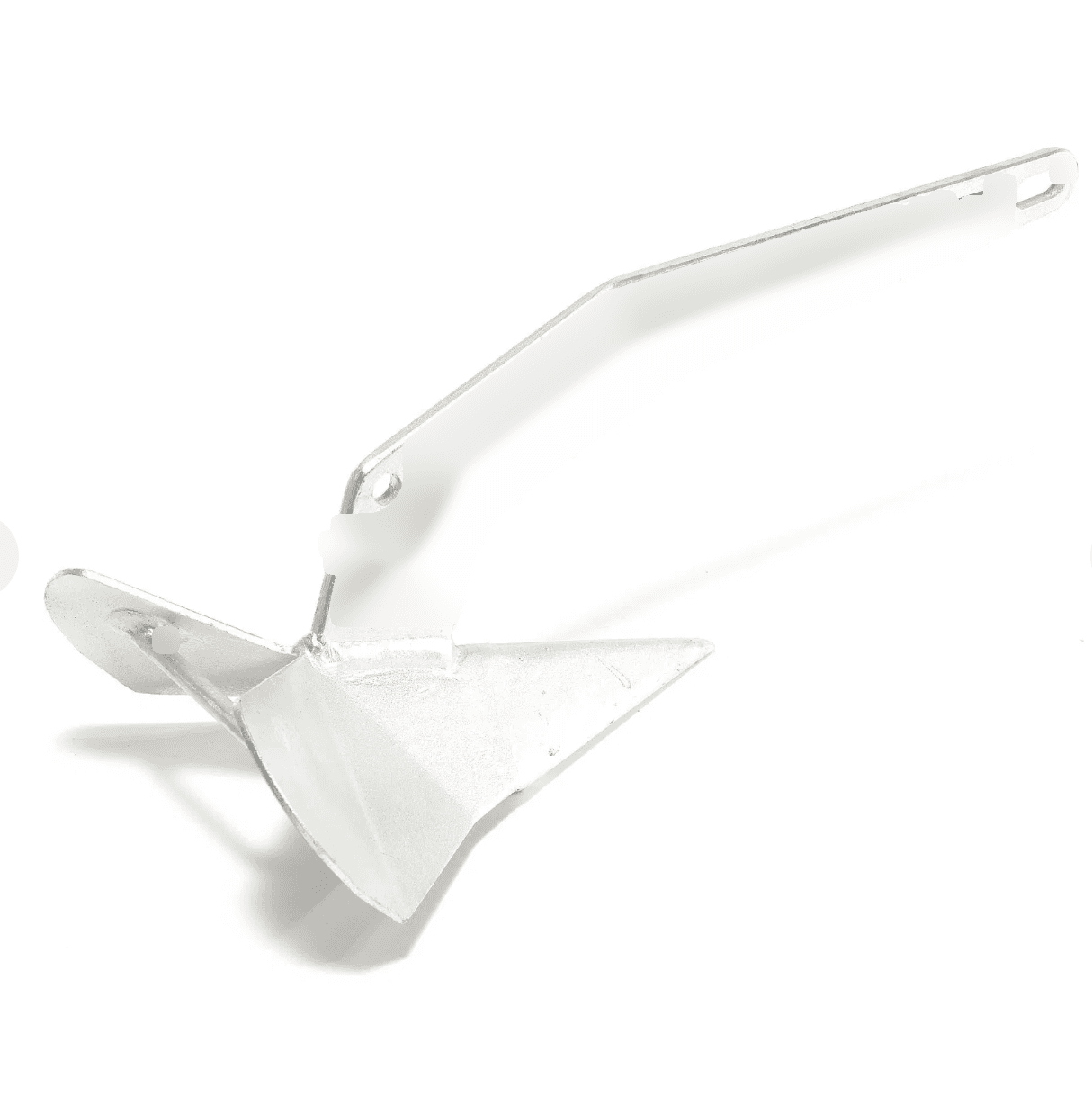
Ballasted-toe scoop

e.g. Spade

Excellent hold

A concave scoop that reaches the same deep, high hold as a roll-bar anchor but rights itself by a heavily ballasted toe rather than a hoop — so nothing protrudes to foul the rode. Many demount into shank and blade for stowage.

Sets: A heavily weighted toe rights it without a roll-bar, then drives in deep.

Holds in
Sand, mud — most seabeds
Skates in
Hard rock, heavy weed

A new-generation primary — proof that self-righting needn’t mean a roll-bar.

Bolt-together scoop

e.g. Mantus

Excellent hold

A roll-bar scoop built to bolt apart into flat pieces for stowage, with a notably sharp toe that bites quickly on a short scope. It belongs to the same high-holding new generation as the roll-bar and ballasted-toe scoops.

Sets: A tall roll-bar flips it upright; the sharp toe sets fast on a short scope.

Holds in
Sand, mud — most seabeds
Skates in
Hard rock, heavy weed

A new-generation scoop — handy where stowage space is tight.

Plough types

The proven cruising shape — a ploughshare that cuts a furrow and buries.

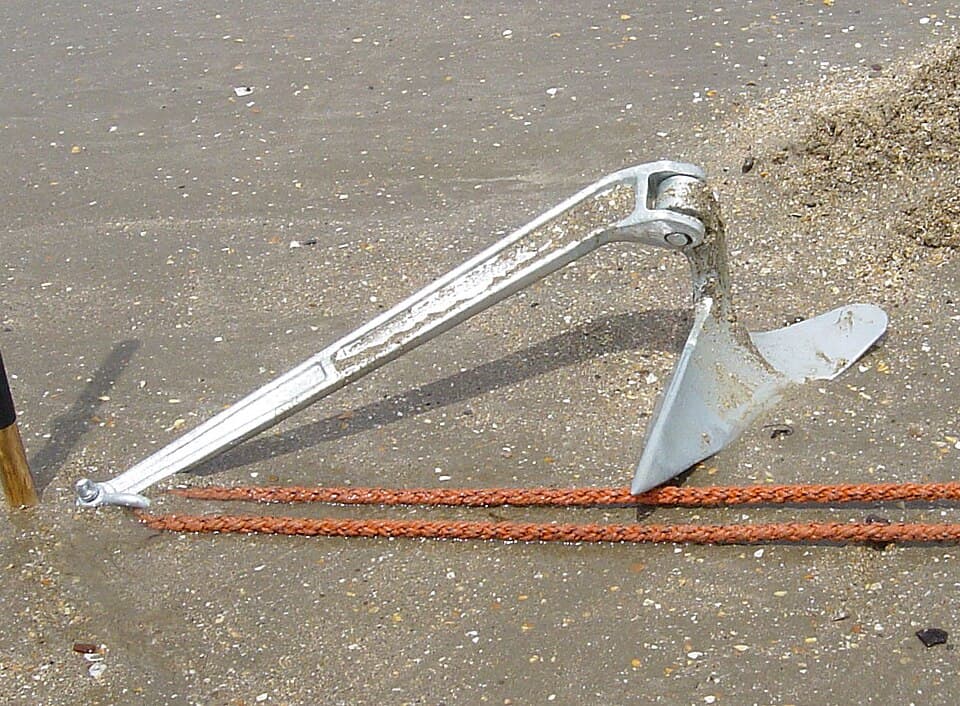
Hinged plough

e.g. CQR

Good hold

The anchor that taught a generation to trust a bow roller. A genuine ploughshare on a hinged shank: the hinge lets the share keep biting as the boat swings to a new wind, instead of being levered out. It is forgiving and well-proven, if slower to set than the scoops that followed.

Sets: The share rolls upright and ploughs a furrow until it is buried.

Holds in
Sand, firm mud, shingle
Skates in
Soft mud, thick weed, rock

The classic cruising bower — the shape most RYA students picture when they hear “anchor”.

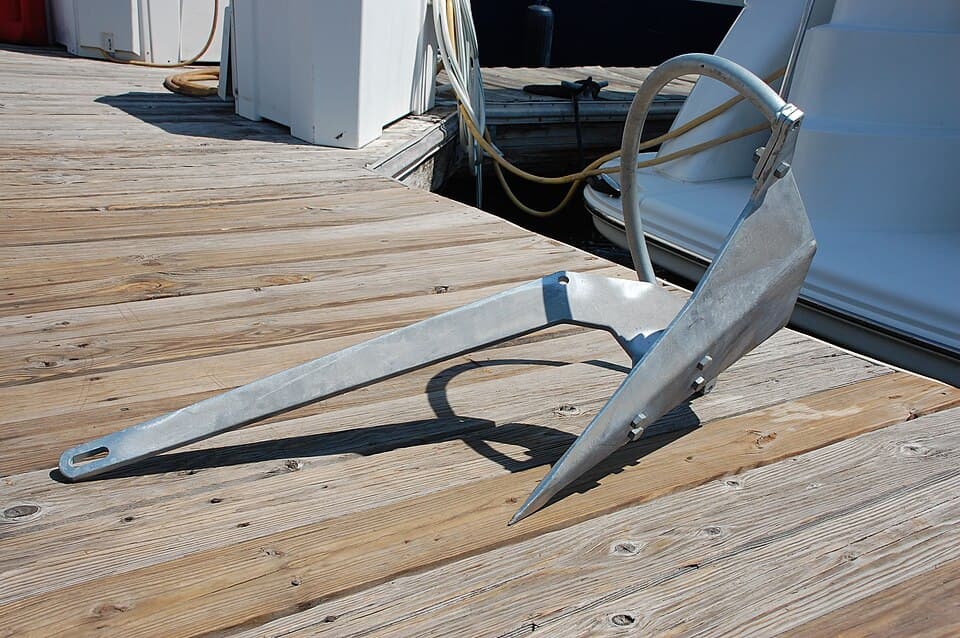
Fixed-shank plough

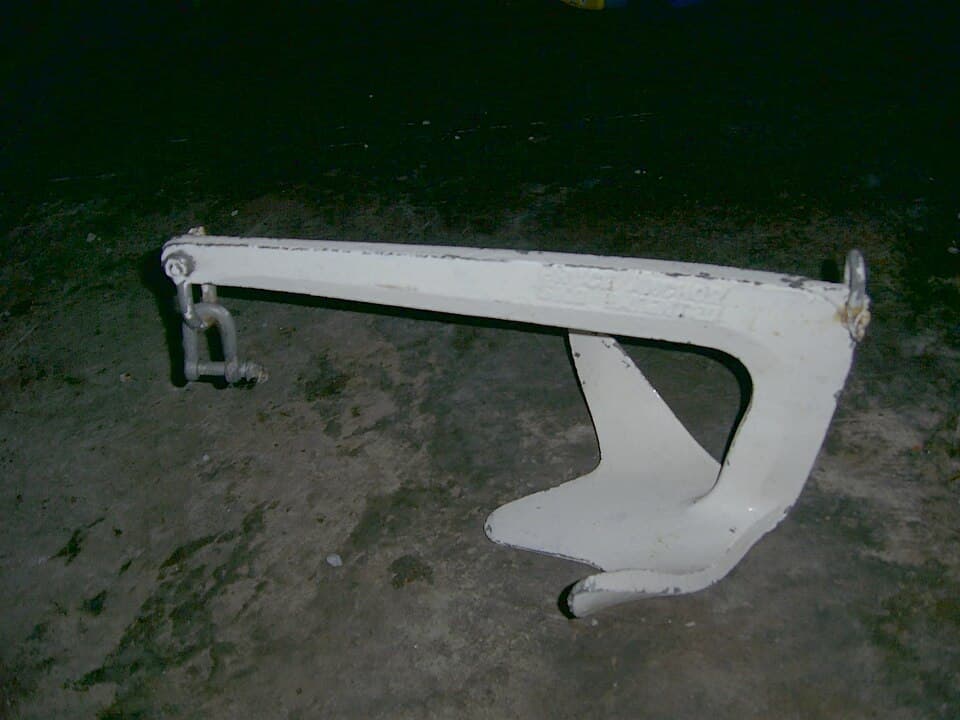
e.g. Delta

Good hold

A plough cast in a single rigid piece, with no hinge to jam. The ballasted tip drops the point to the seabed so it sets quickly, and the straight shank self-launches cleanly over a bow roller. The everyday bower on a great many modern cruisers.

Sets: A weighted tip tips it nose-down so the one-piece share digs straight in.

Holds in
Sand, mud, gravel
Skates in
Heavy weed, rock

A common modern bower — the anchor on the bow of many charter and club boats.

Burying & claw

High holding-to-weight by burying flat flukes, or easy setting with a one-piece claw.

Lightweight fluke

e.g. Danforth

Excellent hold

Two broad, flat flukes pivoting at the crown give an enormous bearing area for very little weight — the best holding-to-weight of any common anchor in the right ground. It folds nearly flat to stow, which is why it is the kedge of choice in a cockpit locker.

Sets: Twin flat flukes pivot and slice in side by side until fully buried.

Holds in
Sand, firm mud
Skates in
Weed, rock, shingle, soft ooze

The classic kedge — the second anchor you lay out to haul off after a grounding.

One-piece claw

e.g. Bruce

Moderate hold

A single-piece claw with nothing to hinge or jam. It sets quickly at almost any angle, resets well when the boat swings, and copes with a wider range of bottoms than most — including rock and weed. The trade is a lower hold for its weight, so it is sized up.

Sets: The broad claw scoops in at almost any angle the moment it touches down.

Holds in
Sand, mud, rock, weed
Skates in
Soft mud (lower hold for weight)

A forgiving, easy-setting bower — popular on smaller cruisers and many charter fleets.

Traditional & special

For the ground the burying anchors skate over — and the jobs they can’t do.

Traditional fisherman

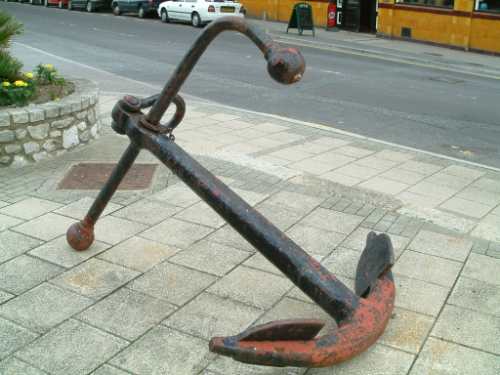
a.k.a. Admiralty pattern

Situational

The age-old anchor of the storybooks: a long shank, a stock across the head to capsize it onto one arm, and two arms ending in narrow palms. It is the one traditional pattern that will hook into rock, stone and thick weed where burying anchors skate — at the cost of a poor hold for its weight, awkward stowage, and one fluke left standing proud for the rode to foul.

Sets: The stock rolls it over so one sharp arm hooks down into the ground.

Holds in
Rock, stone, heavy weed, kelp
Skates in
Sand, mud (low hold for weight)

The weed-and-rock standby — carried when the new-generation anchors would only skate.

Folding grapnel

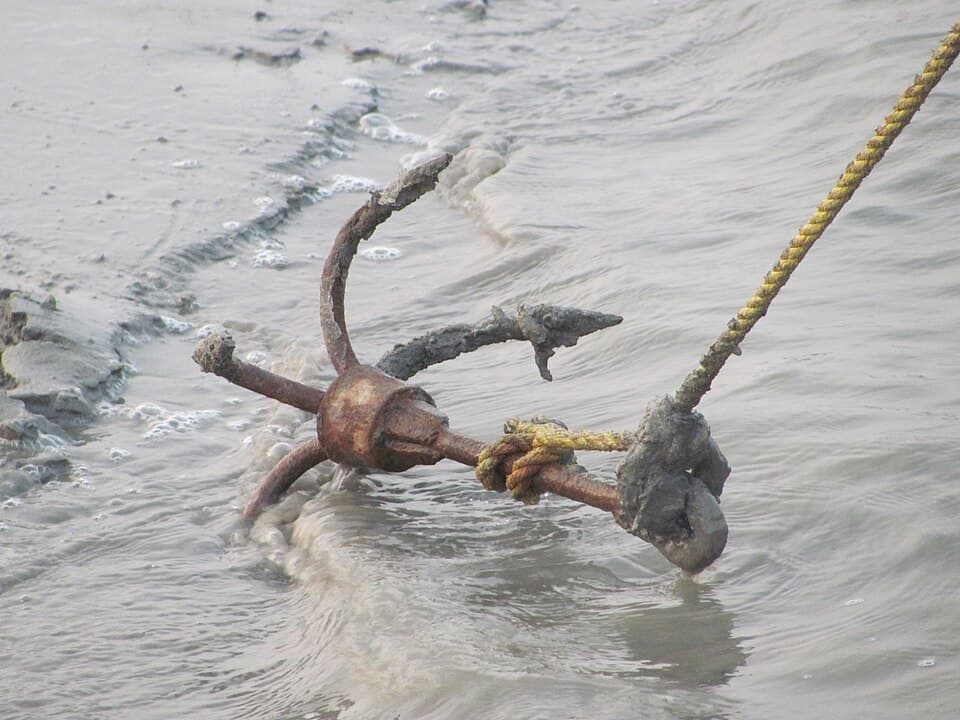
tines / hook anchor

Situational

A cluster of curved tines on a central shaft that folds away to almost nothing. It holds by hooking rather than burying, which makes it the dinghy and tender anchor, a useful tool for snagging rocky ground, and the classic device for grappling a lost mooring chain off the bottom.

Sets: Several curved tines splay out and snag on whatever they can grip.

Holds in
Rock, coral, dinghy work
Skates in
Sand, mud (little hold)

The dinghy and kedge-of-last-resort — and the tool for recovering a dropped chain.

Mushroom

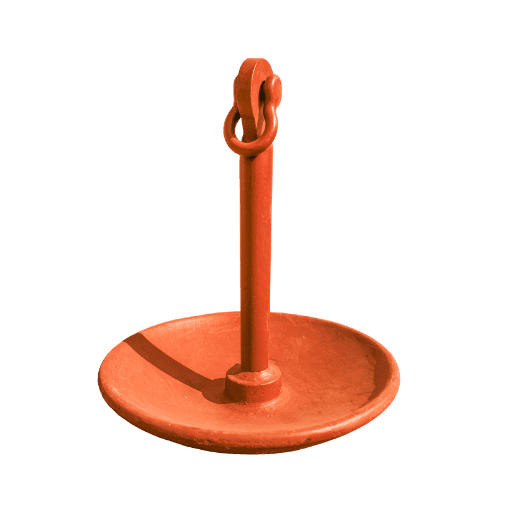
mooring anchor

Situational

An inverted bowl on a shank that works by sinking into soft ground over weeks until the silt closes over it and grips the whole cap. Superb for a permanent mooring in mud; useless for anchoring under way, because it needs time, not a pull, to set.

Sets: It settles and is slowly swallowed by the silt until the bowl is buried.

Holds in
Soft silt, mud (permanent moorings)
Skates in
Anywhere you need to set and weigh the same day

A moorings anchor — the lump on the bottom of the buoy you pick up, not one you deploy.

Picking it up on the water

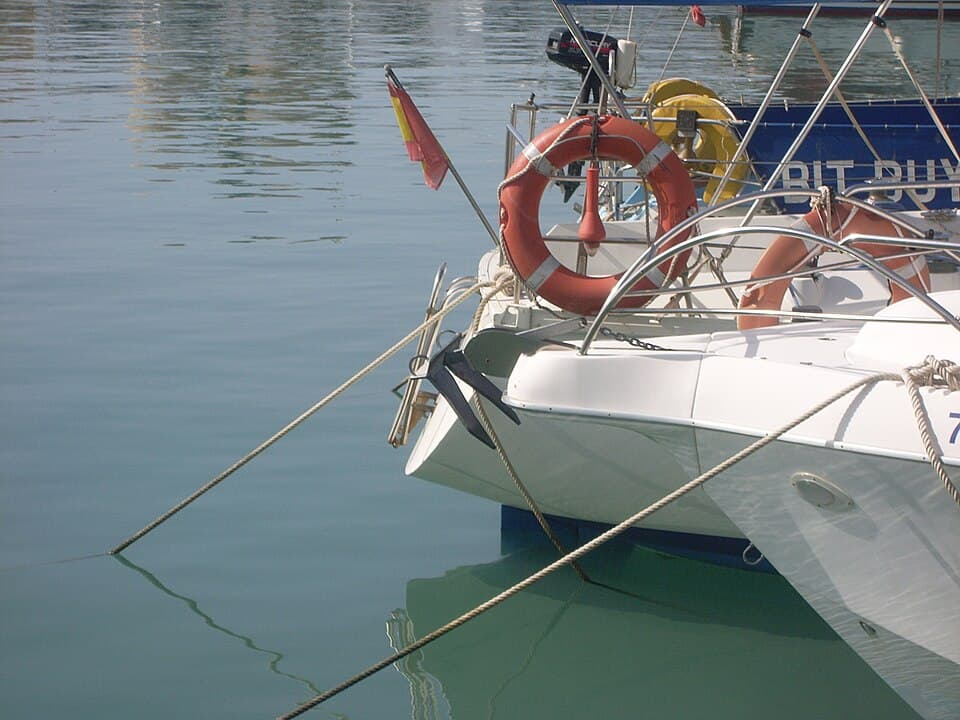
The right anchor is only half the job — the rest is scope, snubber and a careful set. Work the numbers in the anchor-scope trainer, learn the technique in the anchoring lesson, and name every fitting on deck in the 3D boat anatomy.

10 anchor families, illustrated.